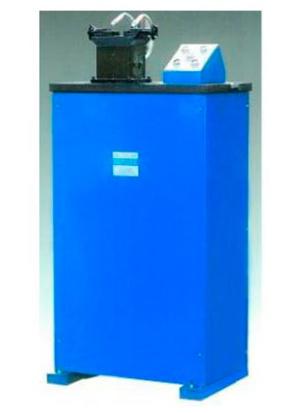
The EZ-3 is a specialized machine designed to evaluate the plasticity, ductility, and deformation behavior of metal wires and thin wire ropes ranging from 1 to 3 mm in diameter under torsional loading conditions.
It is designed to detect structural defects, measure torsional resistance, and verify the quality of wire drawing and cable manufacturing processes.
The equipment is widely used in quality control departments, steel wire manufacturers, metallurgical laboratories, and certification centers, as it allows direct observation of how a wire behaves under continuous torsional stress.
🔍 What Does This Equipment Do?
Evaluates the plasticity of metal wires
Determines ductility through cyclic torsion testing
Detects surface defects and internal flaws that become apparent during testing
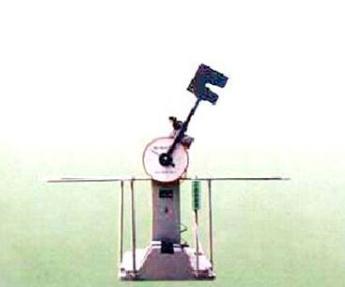
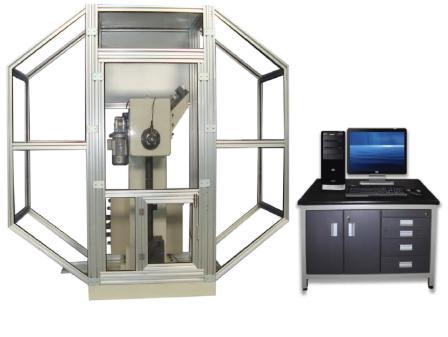
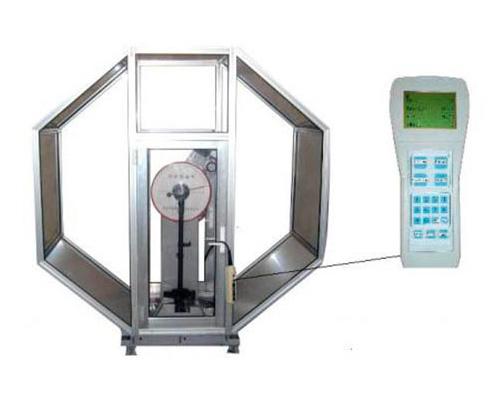
¿Qué es la Máquina para Pruebas de Forja, Impacto y Doblado en Materiales Metálicos? La máquina para pruebas de forja, impacto y doblado son equipos especializados diseñados para evaluar el comportamiento mecánico de los metales cuando son sometidos a fuerzas extremas, tal como ocurre en procesos industriales de: Forjado, Prensado, Laminado, Conformado, Doblado de varillas, barras o láminas, Impactos de alta velocidad. Estas pruebas permiten conocer la ductilidad, resistencia, tenacidad, deformación plástica, anisotropía y comportamiento bajo cargas dinámicas del material. Son esenciales para el control de calidad en industrias metalúrgicas, automotrices, aeronáuticas, estructurales y de fabricación de cables o varillas de acero.
¿Qué es la prueba de forja? Es una prueba que reproduce lo que le ocurre al metal cuando recibe un impacto súbito y muy rápido, tal como en procesos reales de forjado. Permiten estudiar: Cómo se deforma el metal instantáneamente, Si forma grietas o fallas internas, Su capacidad de endurecimiento, Su resistencia bajo carga extrema, Simulan exactamente las condiciones industriales, por eso son muy usadas en acerías y plantas de laminación.
The EZ-10 is a specialized machine designed to evaluate the plasticity, ductility, and torsional resistance of steel wires with diameters ranging from 3 to 10 mm.
Its design accurately reproduces the torsional stresses experienced by wires in real-world applications, enabling the detection of structural defects and validating the quality of the manufacturing process.
It is ideal for quality control laboratories, steel wire and cable manufacturers, and certification centers that require reliable and repeatable measurements.
🔍 What Does This Equipment Do?
Evaluates the plasticity and ductility of wire under continuous torsional loading.
Identifies surface defects and internal flaws by subjecting the wire to rotation until fracture.
Measures the number of revolutions sustained before failure, a key indicator of material performance.
Simulates real operating conditions involving repetitive torsion or rotational loads.
⚙ Features
Designed for steel wires from 3 to 10 mm in diameter.
Allows visualization of surface defects during testing.
Ideal for industrial quality inspection.
Two rotational speeds:
30 rpm
60 rpm
Specimen length: 300–500 mm.
10:1 force ratio provided by the shaft leveling mechanism.
Automated Operation:
The motor starts automatically when the load is applied.
The system stops automatically when the wire fractures.
4-digit LED display for recording revolutions.
Maximum displayed revolution count: 999.9.
The revolution value is automatically retained at the moment of fracture for easy recording.
Robust and stable construction for continuous and high-cycle testing.
🧪 Applications
Steel cables for construction and bridges.
Wires for mechanical engineering applications.
Drawn cables for heavy industrial use.
Quality verification in cable manufacturing processes.
Evaluation of structural defects in cables subjected to torsion.
¿Qué es la Máquina para Pruebas de Forja, Impacto y Doblado en Materiales Metálicos? La máquina para pruebas de forja, impacto y doblado son equipos especializados diseñados para evaluar el comportamiento mecánico de los metales cuando son sometidos a fuerzas extremas, tal como ocurre en procesos industriales de: Forjado, Prensado, Laminado, Conformado, Doblado de varillas, barras o láminas, Impactos de alta velocidad. Estas pruebas permiten conocer la ductilidad, resistencia, tenacidad, deformación plástica, anisotropía y comportamiento bajo cargas dinámicas del material. Son esenciales para el control de calidad en industrias metalúrgicas, automotrices, aeronáuticas, estructurales y de fabricación de cables o varillas de acero.
¿Qué es la prueba de forja? Es una prueba que reproduce lo que le ocurre al metal cuando recibe un impacto súbito y muy rápido, tal como en procesos reales de forjado. Permiten estudiar: Cómo se deforma el metal instantáneamente, Si forma grietas o fallas internas, Su capacidad de endurecimiento, Su resistencia bajo carga extrema, Simulan exactamente las condiciones industriales, por eso son muy usadas en acerías y plantas de laminación.
Equipment for Evaluating Ductility, Torque, and Torsional Resistance in Wires, Rods, and Metallic Materials
⭐ What is the NJS Series?
The NJS Series is a torsion testing machine designed to measure the plasticity, mechanical strength, ductility, and torsional behavior of wires, rods, and other metallic materials. Its design allows both automatic and manual testing, providing excellent versatility for industrial quality control applications as well as scientific research.
It is widely used in laboratories, universities, metalworking industries, steel wire manufacturers, and certification centers that require precise torque and angle-of-twist data in compliance with international standards.
🔍 What Does This Equipment Do?
Applies controlled torsional loads to evaluate plasticity, ductility, torque resistance, and behavior up to fracture.
Automatically records the initial torque (M1) and maximum torque (M2).
Performs automatic or manual tests with selectable torque and angle measurement points.
Identifies surface defects in wires and rods during torsion testing.
Allows retrieval and printing of test results after completion.
🛠 Testing Modes
1️⃣ Automatic Test
The operator turns the handwheel until the specimen fractures.
The machine automatically records:
M1: Initial torque
M2: Maximum torque reached
Results can be displayed or printed after the test.
2️⃣ Manual Test
Allows the selection of any angle or torque level at up to 9 measurement points during the test.
Ideal for research applications requiring a detailed torsion curve analysis.
⚙️ Main Technical Specifications
Maximum torque: 150 Nm
Minimum torque resolution: 0.05 Nm
Accurate measurement range: 20–150 Nm
Maximum torsion angle: 9999.9°
Minimum angle resolution: 0.1°
Relative torque error: ≤ ±1.0%
Torque repeatability: ≤ 1.0%
Maximum specimen diameter: 10 mm
Maximum testing space: 260 mm
Power supply: AC 220V ±10%
📏 Applicable Standards
Complies with international standards for torsion testing, including:
ASTM A938
ISO 7800:2003
GB/T239-1998
GB 10128
Equivalent international standards
🧪 Applications
Metallic wires
Steel rods
Drawn wire products
Metallic materials subjected to torsional loads in industrial processes
Evaluation of surface defects under torsion
Ductility testing for quality certification purposes
¿Qué es la Máquina para Pruebas de Forja, Impacto y Doblado en Materiales Metálicos? La máquina para pruebas de forja, impacto y doblado son equipos especializados diseñados para evaluar el comportamiento mecánico de los metales cuando son sometidos a fuerzas extremas, tal como ocurre en procesos industriales de: Forjado, Prensado, Laminado, Conformado, Doblado de varillas, barras o láminas, Impactos de alta velocidad. Estas pruebas permiten conocer la ductilidad, resistencia, tenacidad, deformación plástica, anisotropía y comportamiento bajo cargas dinámicas del material. Son esenciales para el control de calidad en industrias metalúrgicas, automotrices, aeronáuticas, estructurales y de fabricación de cables o varillas de acero.
¿Qué es la prueba de forja? Es una prueba que reproduce lo que le ocurre al metal cuando recibe un impacto súbito y muy rápido, tal como en procesos reales de forjado. Permiten estudiar: Cómo se deforma el metal instantáneamente, Si forma grietas o fallas internas, Su capacidad de endurecimiento, Su resistencia bajo carga extrema, Simulan exactamente las condiciones industriales, por eso son muy usadas en acerías y plantas de laminación.
The CCT-NC Series is designed to perform accelerated corrosion testing under controlled conditions, complying with advanced test methods used by manufacturers such as Ford, Volvo, Toyota, and Honda. Its modular design allows functions and capabilities to be added or upgraded according to laboratory requirements.
Each chamber is engineered to reproduce the most demanding automotive and industrial environments while fully complying with global standards such as:
ASTM G85 (Annex A5, Prohesion)
GMW 14872
Ford CETP 00.00-L-467
SAE J2334
Toyota TSH1555G
ISO 16701 and ISO 14993
Volkswagen PV 1210
Volvo VCS 1027
And many more
Whether validating coatings, fasteners, or components, Auto Technology’s Cyclic Corrosion Test Chamber provides repeatable, traceable, and certifiable testing conditions—the same chambers used in our own A2LA-accredited corrosion testing laboratory.
🧩 Standard Salt Spray Testing Equipment
The CCT (Cyclic Corrosion Test Chamber) salt spray cabinet is the foundational testing system that has served the corrosion testing community for more than 50 years. Its simple and reliable design supports traditional testing specifications such as ASTM B117, MIL-STD-883, ASTM G85 A1 (Acetic Acid), ASTM B368 (CASS), MIL-STD-810D, and many others...
🧩 Multipurpose Salt Spray Testing Equipment
The Multipurpose Fog Chamber (MPF) is designed to meet automotive accelerated corrosion testing specifications that include salt fog, humidity, acetic acid, CASS, and simple cyclic testing such as ASTM G85 Annex 5...
🧩 Cyclic Salt Corrosion Testing Equipment
The Auto Technology Cyclic Corrosion Chamber is one of the most sophisticated and advanced cyclic corrosion systems available. Utilizing advanced software for unmatched data acquisition and control, the CCT is capable of performing all major corrosion standards, including SAE J2334, GM9540P, ASTM B117, and many others...
🔧 General Features
• Modular Design
Allows additional functions and upgrades without replacing the entire chamber.
Easy maintenance and component accessibility.
• Available Test Modes
Includes fully automatic cycles designed to reproduce realistic corrosion environments:
Salt Fog
Prohesion Cycle
Condensation / Humidity
Air Drying
Dry-Off Cycle
Ambient Drying
Programmable temperature and humidity ramps
Automotive-specific cycles for Ford, GM, Honda, Toyota, and Volvo
• Intelligent Controller
Digital touchscreen controller
Records and stores all test data
Custom or pre-programmed cycle configuration
Integrated data logging
USB port and data transfer capability
• Construction and Materials
Corrosion-resistant chamber construction
High-uniformity salt spray atomization system
Integrated solution reservoirs
• Safety Features
Over-temperature protection
Visual and audible alarms
Automatic shutdown in the event of system failure
📏 Key Product Features
Feature
Benefit
True Multi-Cycle Control
Simulates salt spray, humidity, drying, ambient temperature, and temperature ramps within a single programmable system.
Mechanical Refrigeration*
Enables testing down to -30°C and provides rapid transitions between temperature and humidity phases.
Controlled Relative Humidity (RH)*
Maintains precise humidity levels for ISO 16701, GMW 14872, and Volvo CCT protocols.
Oscillating Spray Bars*
Provides uniform salt solution impact for Ford L-467 and Volvo-specific testing.
Automated Pneumatic Lifts*
Allows smooth, hands-free lid operation for environmental cycling and operator safety.
Multiple Mixing Tanks*
Supports multiple test solutions or extended-duration testing without refilling.
Immersion Capability*
Enables cyclic immersion testing for advanced corrosion fatigue and paint creep evaluations.
Immersion Capability*
Provides direct high-velocity spraying for specialized coating and fastener testing.
Temperature Ramp Function
Simulates natural environmental transitions with precise programmable control.
Computer or PC Controls*
Offers intuitive touchscreen and PC-based programming with complete data logging and traceability.
LN₂ Package*
Enables rapid cooling transitions and low-temperature conditioning using liquid nitrogen.
SO₂ Package*
Introduces controlled sulfur dioxide for specialized automotive and coating industry testing.
Solution Recirculation System*
Reduces solution waste and maintains consistent salt concentration during long-duration tests.
Recirculation Scrubbers* and Forced Ventilation*
Improves chamber airflow and fog evacuation, ensuring uniform conditions and faster cycles.
U.S.-Built Reliability
Manufactured and calibrated in Ohio for dependable performance and rapid support.
Global Support Network
Worldwide availability of parts, calibration, and technical assistance.
12-Month Warranty
Comprehensive warranty backed by experienced service engineers.
Data Logging* and Audit Traceability
Simplifies compliance documentation through automatic logging of temperature, humidity, and spray-cycle data.
* Optional custom feature.
🔍 Full Range of Configurations
Available in capacities from 20 to 112 ft³, as well as custom walk-in chambers, with options including:
Mechanical refrigeration (down to -30°C / -22°F)
Controlled relative humidity
Immersion and impact testing packages
Automated pneumatic covers
Solution recirculation and mixing systems
LN₂ and SO₂ additive packages for specialized environments
Compatible, Calibratable, and Traceable
Designed and manufactured in the USA to fully comply with ASTM, ISO, SAE, and OEM specifications.
Compatible with ATC’s internal A2LA calibration and proficiency testing programs.
Trusted by the same engineers who help define the standards followed throughout the industry.
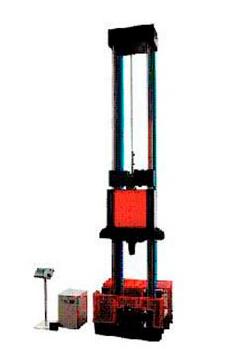
¿que es un pendulo de impacto caída libre? Las Torres de Caída de Peso son sistemas diseñados para realizar pruebas de impacto monoaxiales y multiaxiales en productos o especímenes normalizados. Permiten ajustar energías de impacto entre 5 y 2000 julios (J), lo que posibilita ensayar una amplia variedad de materiales y componentes. Gracias a su estructura modular y amplia zona de ensayo, pueden adaptarse a diversas necesidades industriales y actualizarse fácilmente.
Aplicaciones: Ensayos en productos terminados: equipos deportivos (botas de esquí, patines, snowboard) y componentes automotrices. Pruebas según normas internacionales: ISO 6603-2, ISO 7765-2, ASTM D 3763, ASTM D 3029 (Método B), ISO 8256 A, CAI Test Boeing BSS 7260, Airbus AITM 1.0010, Charpy ISO 179 y ISO 148-1. Ensayos rotura/no rotura o instrumentados (adquieren fuerza y energía absorbida).
Salt Spray – CASS – Corrodkote – Controlled Humidity
.
📘 General Description
The SCCH Chamber is a specialized system designed to perform accelerated corrosion testing under highly controlled conditions. It is engineered for laboratories that require reproducibility, thermal stability, and strict compliance with international testing standards.
It is ideal for evaluating coatings, metals, polymers, automotive components, electronic devices, and aerospace materials by exposing them to severe and repeatable corrosive environments.
🔍 Types of Tests Performed
The SCCH Chamber supports a comprehensive range of standardized testing methods:
1. Salt Spray Testing
ASTM B117 – The most widely used test for evaluating coatings, surface treatments, and general corrosion resistance.
2. CASS Testing (Copper-Accelerated Acetic Acid Salt Spray)
ASTM B368 – Accelerated salt spray testing using acetic acid and copper chloride.
Ideal for decorative coatings such as:
Nickel-Chromium
Nickel-Chromium-Copper
Automotive components
3. Corrodkote Testing
Designed for galvanized and decorative coatings.
Simulates complex atmospheric corrosion conditions to evaluate coating performance and durability
4. Humidity and Condensation Testing
ASTM D1735
ASTM D2247
ISO 6270 (International Equivalent)
These tests evaluate resistance to constant humidity and condensation, making them ideal for:
Paints
Protective coatings
Electronic materials and components
5. Advanced Corrosion Testing Modes
ISO 9227 (NSS, AASS, CASS)
ASTM G85 (A1, A2, A3, A4)
Includes modified salt spray methods, acetic acid fog, SO₂-containing environments, and other specialized corrosion test procedures.
🔧 Chamber Construction and Design
The SCCH Series is engineered to provide durability, ease of maintenance, and maximum stability throughout the testing process.
Water-Jacketed Design
Corrosion-Resistant Housing
Seamless Internal Chamber
The chamber is surrounded by a water jacket that maintains highly stable internal temperatures.
Benefits include:
Excellent temperature uniformity throughout the chamber
Reduced influence of external environmental fluctuations
Improved test repeatability and accuracy
Depending on the model configuration:
Transparent Acrylic Construction – Allows real-time observation of test specimens during operation.
Polypropylene (PP) Construction – Provides enhanced chemical resistance for severe corrosion testing environments.
Monolithic construction with no joints that could corrode
Long-lasting corrosion-resistant polymer lining
Easy cleaning and maintenance
Extended service life in aggressive testing environments
⚙️ Key Advantages
✔ Compatible with the most widely recognized corrosion testing standards.
✔ Excellent temperature and humidity stability.
✔ Minimal variation in salt concentration and spray atomization.
✔ Low maintenance requirements due to corrosion-resistant construction.
✔ User-friendly operation and monitoring.
✔ Ideal for automotive, coatings, metals, paint, electronics, and materials testing laboratories.
¿que es Cámara de Prueba de Corrosión scch? La serie SCCH es la solución más completa para ensayos de corrosión acelerada. Permite ejecutar métodos como niebla salina, CASS, Corrodkote y pruebas de condensación con total estabilidad y precisión. Su diseño con camisa de agua garantiza un control térmico uniforme, mientras que su interior sin costuras y recubierto de polímero evita la corrosión interna y facilita la limpieza.
Ideal para recubrimientos metálicos, piezas automotrices, galvanizados, polímeros y tratamientos superficiales que requieren resistencia excepcional a ambientes hostiles.