+52 33 3817 0140 | +52 33 3817 8122

.
Erichsen Ductility Testing Machines
Ductility and Anisotropy Tester for Metal Sheets and Strips
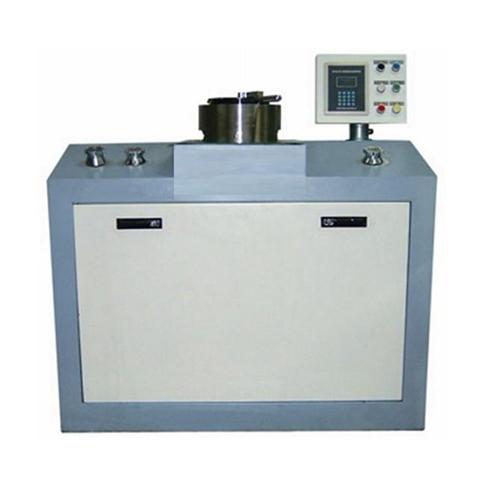
Erichsen cupping Tester
⭐ What is the GBS-60B and what is it used for?
The GBS-60B is a specialized instrument designed for ductility and anisotropy testing of metal sheets and strips, especially non-ferrous materials.
It is designed to evaluate how a material behaves when subjected to plastic deformation, allowing users to determine its ability to stretch, bend, and withstand stress without failure.
It is widely used in:
- Metallurgical laboratories
- Automotive industry
- Sheet metal manufacturing
- Quality control of rolling and forming processes
🔧 What tests does the GBS-60B perform?
The equipment is designed for two main types of testing:
1. Basic Ductility Test (Ball or Punch Penetration)
Esta prueba determina la capacidad del material para deformarse antes de romperse.
🔹 Procedure:
The system uses a steel ball or steel punch of a specified dimension to compress the specimen, which is clamped with a force of 10 kN.
The force is applied until the specimen is penetrated.
The penetration depth of the steel punch into the specimen represents the ductility value of the tested sample, and this value is used to estimate the material’s plastic deformation capability.
🔹 What does this test determine?
- Resistance to plastic deformation
- Material behavior under impact or pressure loads
- Ease of material processing (stamping, bending, rolling)
2. Ductility and Anisotropy Test for Non-Ferrous Materials
This test evaluates how the material deforms in different directions.
🔹 Procedure:
The ductility test is a method that uses a punch column of a specified size to impact a round plate with a defined external diameter, positioned between a clamping die and a ductility testing die.
The round plate stretches along the radial direction and bends under the pressure of the punch, forming a cup shape. During this process, two symmetrical protrusions known as “ears” are formed along the edge of the cup. The anisotropy of the material is evaluated by measuring the ear height ratio.
🔹 What does this test determine?
- Material anisotropy (differences in properties depending on rolling direction)
- Sheet uniformity
- Material capability for deep drawing without failure
- Ear height measurement allows identification of the directional behavior of mechanical properties, essential for deep drawing processes
⭐ Why is the GBS-60B important?
✔ Detects rolling and heat-treatment defects
✔ Helps select materials with improved stamping capability
✔ Ensures quality in metal forming processes
✔ Essential for predicting failures caused by low ductility
 (Agrandar)


 You can chat directly with us using our live chat feature.