
 +52 33 3817 0140 | +52 33 3817 8122

Return to Special Instruments← Machines for Testing Forgings (PTS)←.
.
Bend Testing Machines
Complies with ASTM A615-89, ASTM A615M-89, ISO 7438:1985, and ISO 8491:1986(E) standards.
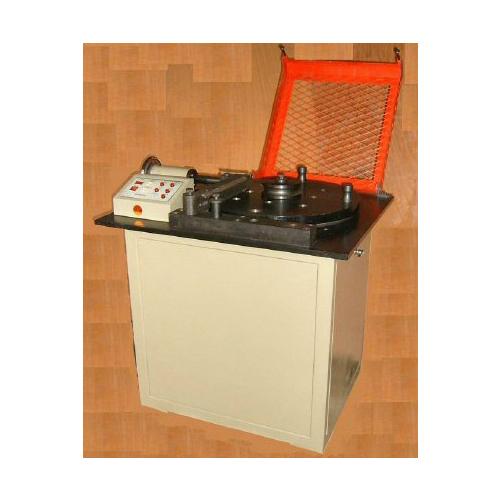
The Bending Testing Machine is a specialized system designed to perform bending tests on reinforcing bars, steel bars, pipes, and other materials. It can conduct bend tests in both directions according to applicable testing standards and specifications.
⭐ What Are They and What Are They Used For?
Bending Testing Machines are designed to evaluate the ductility, flexibility, strength, and deformation capability of metallic and non-metallic materials when subjected to bending forces.
These tests determine whether a material can be bent without developing cracks, fractures, or unacceptable deformation, making them essential for structural applications, automotive manufacturing, metalworking, construction, and quality control processes.
🔧 What Do These Machines Do?
These machines apply a controlled force to a specimen—typically a bar, sheet, plate, pipe, or test sample—to bend it to a specified angle, such as 45°, 90°, 120°, or up to 180°, depending on the testing standard.
The test allows evaluation of:
✔ Ductility
The material's ability to deform plastically without breaking.
✔ Resilience and Flexibility
The capacity to recover its shape or withstand permanent deformation under load.
✔ Crack Resistance
Detects internal defects, brittleness, and potential failure points within the material.
✔ Manufacturing Process Quality
Evaluates the effects of welding, rolling, forging, heat treatment, and annealing processes on material performance.
🏭 Where Are They Used?
These machines are widely used in laboratories and production facilities involved in:
- Metallurgy
- Steel manufacturing
- Automotive industry
- Construction industry
- Pipe and tube manufacturing
- Forging and rolling mills
- Industrial quality control
⚙️ Common Features of Bending Testing Machines
Although specifications vary by model, most systems include:
- Heavy-duty, stable frame construction
- Specimen holding and clamping devices
- Bending punch and support mandrel
- Manual, motorized, or hydraulic operation
- Adjustable bending angle settings
- Precise force measurement capabilities
- Safe operation and easy calibration procedures
 (Agrandar)


 You can chat directly with us using our live chat feature.



